The Science of Swirl Mark Removal: Advanced Polishing Techniques Explained
When you look at your vehicle's paint under direct sunlight and see those circular patterns clouding the surface, you're witnessing the visible result of microscopic clear coat damage. Swirl mark removal isn't just about making your paint look better - it's a precise technical process that requires understanding paint structure, defect formation, and correction methodology.
Most vehicle owners see swirl marks as annoying imperfections. Understanding how swirls form and what's required to remove them reveals why professional paint correction science produces results that DIY attempts struggle to match. The difference between professional correction and amateur attempts comes down to technical knowledge.
Understanding Clear Coat Structure and Damage
Automotive paint restoration begins with understanding modern automotive finish construction and how damage occurs within these layers.
Your vehicle's paint system consists of multiple layers. The base coat provides color while the clear coat sits on top, protecting the color layer and providing gloss. This clear coat layer is where swirl marks live.
The clear coat has tiny peaks and valleys at the microscopic level. When swirl marks form, you're creating deeper grooves that scatter light differently than undamaged areas. This light scattering makes swirls visible - especially in direct sunlight.
Clear coat thickness determines how much correction your paint can safely handle. Understanding this structure explains why swirl mark removal requires precision. You're removing microscopic amounts of clear coat to level the surface and eliminate light-scattering imperfections.
How Swirl Marks Actually Form
Swirls form when something abrasive contacts your clear coat with circular motion while creating enough pressure to deform the surface. The most common culprit? Improper washing techniques. When you use dirty wash media, insufficient lubrication, or inappropriate materials, you're dragging particles across your clear coat, creating microscopic grooves.
Automatic car washes create particularly heavy swirling. The rotating brushes carry particles from previous vehicles, creating circular damage patterns. Even careful handwashing can create swirls if the technique isn't perfect. Washing in circular motions concentrates abrasive action in circular patterns.
Environmental factors contribute too. Dust settling on your paint acts as an abrasive layer. When anything moves across this dust, it can drag particles across the clear coat, creating damage. This is why garage-kept vehicles develop fewer swirls than those parked outdoors.
The Physics of Paint Correction
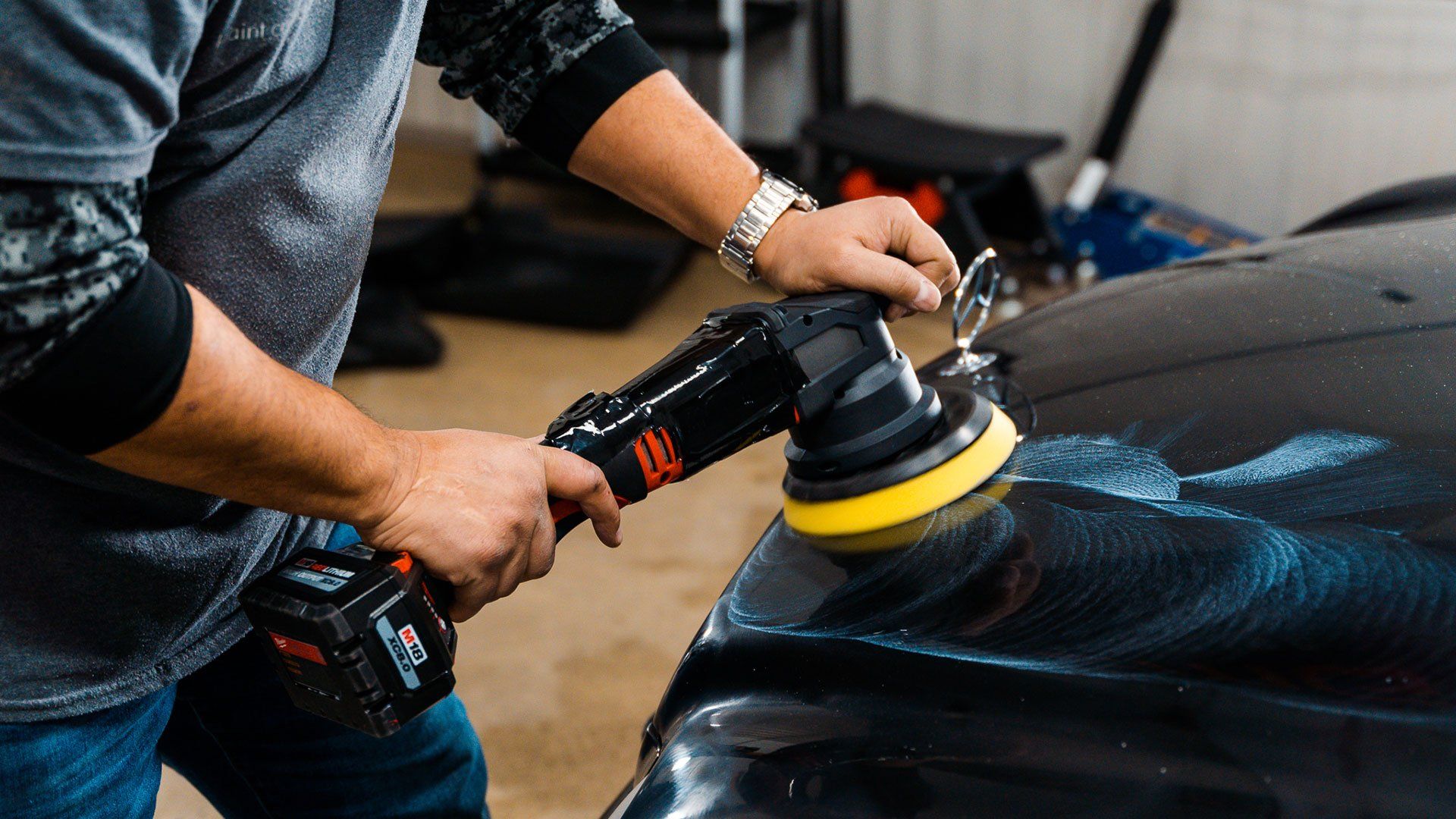
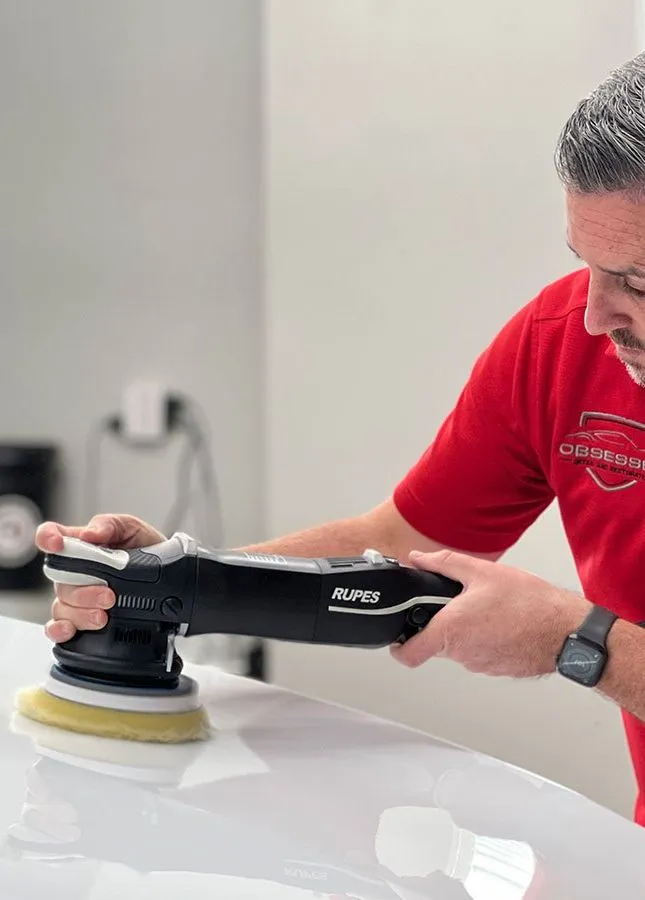
Machine polishing works through controlled abrasion that levels your clear coat surface.
When professional installers at Obsessed Detail and Restoration correct paint, they're using polishing compounds containing abrasive particles. These particles, combined with machine action and proper technique, remove microscopic amounts of clear coat to level the surface.
The physics involves abrasive particle size and hardness, polishing pad material and density, machine speed and oscillation pattern, applied pressure, and working time before the compound breaks down. Each factor affects how much clear coat gets removed and how refined the surface becomes.
Compound particles break down during polishing - starting larger and more aggressive, then fracturing into smaller particles that refine the surface. Heat generation during polishing presents another consideration. Excessive heat can cause clear coat damage. Professional technique manages heat through appropriate speed, pressure, and working time.
Professional Technique: More Than Just Equipment
The expertise behind paint polishing techniques extends beyond owning the right tools - it's about understanding how to use them properly.
Professional paint correction requires systematic approaches. The process starts with a thorough surface inspection under proper lighting. Professionals work in controlled sections rather than attempting entire panels at once.
Pad selection, machine speed adjustment, and pressure application all require expertise. Different pad materials work with specific compounds. Machine speed needs constant adjustment based on paint response. Pressure must be precise - too much generates heat and causes damage, too little means insufficient correction. Developing this feel takes extensive practice that DIY attempts lack.
Multi-Stage Correction: Progressive Refinement
Advanced paint defect removal often requires multiple stages. Single-stage correction handles light defects, but heavily swirled paint needs progressive approaches where aggressive cutting is followed by refinement stages.
The progression follows this pattern: heavy cutting removes visible defects, medium polishing refines the surface, and fine polishing maximizes gloss. Each stage uses progressively finer abrasives and softer pads. Between stages, surface inspection verifies progress before moving forward.
Why Professional Correction Delivers Superior Results
Professional installers at Obsessed Detail and Restoration bring systematic approaches developed through extensive training and practice. They've corrected numerous vehicles and encountered various paint types and defect severities.
Proper lighting reveals defects that standard garage lighting misses. Professional facilities use specialized inspection lights showing surface imperfections clearly. Surface preparation before correction matters enormously - paint must be completely decontaminated for compounds to work effectively.
Equipment quality affects results significantly. Professional-grade polishers offer variable speed control, consistent power delivery, and ergonomic designs enabling proper technique. The combination of expertise, proper equipment, quality products, and systematic approaches creates results that DIY correction struggles to match.
Protecting Corrected Paint: The Final Step
Professional automotive paint restoration doesn't end when swirl marks are removed - protection ensures results last.
Freshly corrected paint is perfectly smooth and clean, making it ideal for protection application. But without protection, that perfect surface begins accumulating new defects immediately.
Ceramic coating provides optimal protection for corrected paint. The coating bonds with your smooth, clean, clear coat, creating a protective layer that resists the abrasion causing swirl marks. This hardness means wash-induced damage becomes much less likely when proper technique is used.
The coating's hydrophobic properties make maintenance safer. Water and contaminants bead up and roll off rather than bonding to your surface. Chemical resistance protects against environmental damage that would otherwise degrade your corrected paint.
Without protection, you're looking at correction cycles repeating as new swirls accumulate. With proper ceramic coating protection, your corrected paint maintains its perfection much longer.
Ready to see what professional paint correction can do for your vehicle? Contact Obsessed Detail and Restoration to discuss your paint's condition and experience the difference that technical expertise makes in achieving exceptional results.
Frequently Asked Questions
What causes swirl marks to form even with careful hand washing?
Swirl marks form when abrasive particles contact your clear coat with sufficient pressure to create surface deformation. Even careful hand washing can introduce swirls if the wash media picks up dirt particles, if insufficient lubrication allows friction, or if drying towels contain particles from previous use. The circular motion common in washing concentrates damage in circular patterns. Prevention requires clean wash media, proper lubrication, gentle pressure, and straight-line motions.
How does professional paint correction differ from using consumer polishing products?
Professional correction uses systematic approaches with proper surface preparation, appropriate lighting for defect inspection, professional-grade equipment, and technique expertise developed through extensive practice. Professionals select compounds and pads matched to your paint characteristics and defect severity. They control multiple variables simultaneously - speed, pressure, working time, and heat generation - to achieve results safely. The expertise gap matters more than equipment differences.